
The retirement industry, reconfigured
Introducing the 5500RADAR Intelligence Review: 47 pages of historical filing research, technical developments and practical questions for the people responsible for employee benefit plans.
Read articleThe 5500RADAR publication
Practical perspectives on plan audits, public filings, and the rules shaping the work.
9 published
Introducing the 5500RADAR Intelligence Review: 47 pages of historical filing research, technical developments and practical questions for the people responsible for employee benefit plans.
Read articleIRS Notice 2026-48 outlines the Saver’s Match for 2027 contributions, with first claims generally filed in 2028—and the decisions plans and providers face now.

Caron Bletzer partner Patrick Griffin, CPA, will share plan-audit expertise at ASPPA Annual 2026 in San Antonio on October 18.

What DOL studies reveal about benefit plan audit quality, why a Form 5500 can be rejected, and five questions to ask before hiring an auditor.

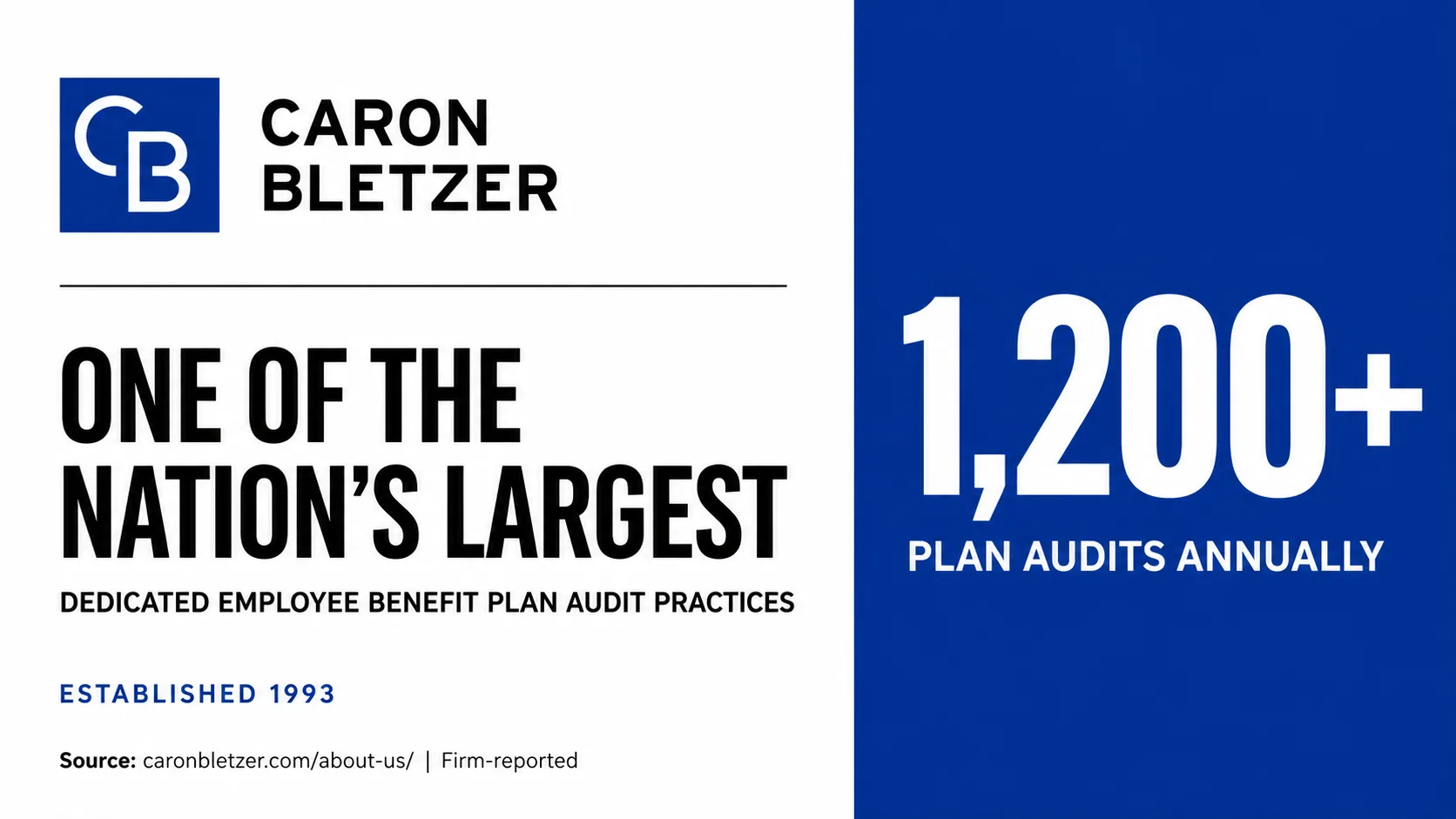
Discover Caron Bletzer's dedicated employee benefit plan audit practice, experienced leadership, national reach and publicly documented review results.
ERISA judges a fiduciary decision by the process behind it, not by how the investment performed. That distinction is what a committee's minutes have to be able to show.
Return- and schedule-level tables stop before the attached audit documents. The opinion language, the delinquent-contribution disclosure, the forfeiture balance and the named holdings are one layer down, in documents that are just as public.
The band does not replace the 100-participant rule. It adds a permitted prior-year filing-category election. The separate small-plan audit-waiver test is answered on its own terms.
Dropping eligible-but-zero-balance participants from the count did more than shrink the large-plan population once. It changed the count-driven path toward a first audit. It also made filing history and the separate small-plan waiver analysis more important.
We cite primary sources, state each article’s scope, and record material corrections instead of silently rewriting the record.